Sunday, April 23, 2017

Treasuring our Treasures--Why We Do Science As We Do

The Navigators have spent the past few months studying animals, plants, and conservation through the lens of our overarching concept “treasure”.  

We do this in order to stimulate higher-level thinking by providing a “big idea” that helps us process the world around us. It also enables us to apply the “big idea” across the curriculum, incorporating literature, writing, social studies, math, art and more to our studies, making connections that increase our understanding. Here are some ways that the first graders are beginning to become critical and creative thinkers:
  •         Comparing and contrasting ideas
  •         Providing reasoning for their thinking
  •         Evaluating  situations
  •         Evaluating others’ ideas
  •         Thinking independently
  •         Applying ideas to different contexts
  •         Developing stories (“Feathers” play and stop-motion film!)
  •         Thinking of unique ideas/outside the box

Here's a glimpse into our classroom STEAM Lab! 

Content: We start with the basics—vocabulary, needs and parts of plants, etc.—and go from there. It’s interesting, there isn’t a lot of botany web pages geared toward younger students. But we were able to handle it, excelling in higher-level and problem solving and having fun in the process!

A close-up look at the stem of a celery plant

We did tons of experiments plus each student had their own plant and came up with a question and an experiment.  We then compiled all of our experiments, compared them to the control plant and to each other’s and then drew conclusions from our findings. We were all surprised that the “crowded plant” experiment grew two times as much as the others!

"What will happen if I feed my plant Miracle Grow?"


"What will happen if I put my plant in the refrigerator?"


"What will happen if I "water" my plant with Coke?"


This project involved some engineering. "Will my plant grow up this tube to find the light?"


Differentiation: We had activities that challenge and engage both emergent and advanced readers, writers and thinkers. 


Research: The fifth grade Alchemists came and helped us do research on the internet on the various uses of plants. What a joy as a teacher to see my former students so adept, kind and helpful as they mentored the Navigators. All were engaged, both mentors and mentorees, and learned a lot about their chosen plant. We then wrote a five (at least) sentence research paragraph about the uses of our plant and shared it with our classmates.


We incorporated art into science:  Making  beautiful plant models

 Making  Georgia O'Keeffe flowers

Project-based learning: This is a model in which students are encouraged to engage in learning activities that are integrated with real-world issues and practices. We became Fish and Wildlife Department Scientists checking out the health of a local orchard’s environment by looking at the pollination rate of its recent apple crop. I had to tell the kids that we were just pretending, that no, we weren’t going to actually send our results to the government. But maybe someday….

Our auction project also became a PBL activity. We asked all the classes to collect plastic lids for us and when we had enough, we re-used them in a beautiful remaking of Van Gogh’s Country Road in Provence by Night. Each student had the sense that he/she is making a difference in our world. 

Guest speaker: We had one of our dads, who has a huge organic garden, come in and teach us about composting. We're eager to get the composting bin in our school garden up and running!


Hands-on Learning: And we're eager to plant seeds and have some school-fresh food before the end of the year! Can't wait to eat radishes, lettuce and peas! Yum!!


We will continue to talk about treasuring our treasures as we move on to our study of Native Americans. And hopefully we'll be lifelong conservationists, making treasuring our treasures a lifestyle that will keep our world beautiful for generations to come. 

Saturday, April 22, 2017

Botany 101: It's All About the Cells

After studying zoology for several months, the Navigators moved on to our study of botany.
The first difference we discovered was that animals and plants are different at the cell level. 

We looked at cells in our microscopes and then we made our own edible cell models!

A great way to "take in" information

An animal cell on the left, a plant cell on the right
How are they the same?
How are they different?

They both have cytoplasm.

They both have a cell membrane, a nucleus, mitochondria and a vacuole
(although a plant has a larger vacuole.)

A plant cell has a cell wall

This cell wall gives the plant cell a rectangular shape. 

The plant cell has green chloroplasts. 
The chloroplasts contain chlorophyll which give plants their green color. 


How's that for a refresher course in Botany 101?
And these first graders get it!!

We had a great time learning about and eating our animal and plant cells

We licked the cytoplasm clean!

Saturday, April 8, 2017

Arbor + Etum = Place of Trees

On the first day of spring we had a fun, learning, wet time at the Washington Park Arboretum/University of Washington Botanical Gardens.  What a great way to expand on our study of plants. 

Here are some pictures of our trip.


A Latin lesson

An apiary! We're especially interested in bees. 


One of our favorite book series

Lots of native and non-native trees

An up close look


These walkers helped us with our scavenger hunt. 

We've set a record for rainfall this year and we could tell!

Helping to pollinate the hellebores. 


We learned about native trees and how Native Americans used them. 

A plank house wall


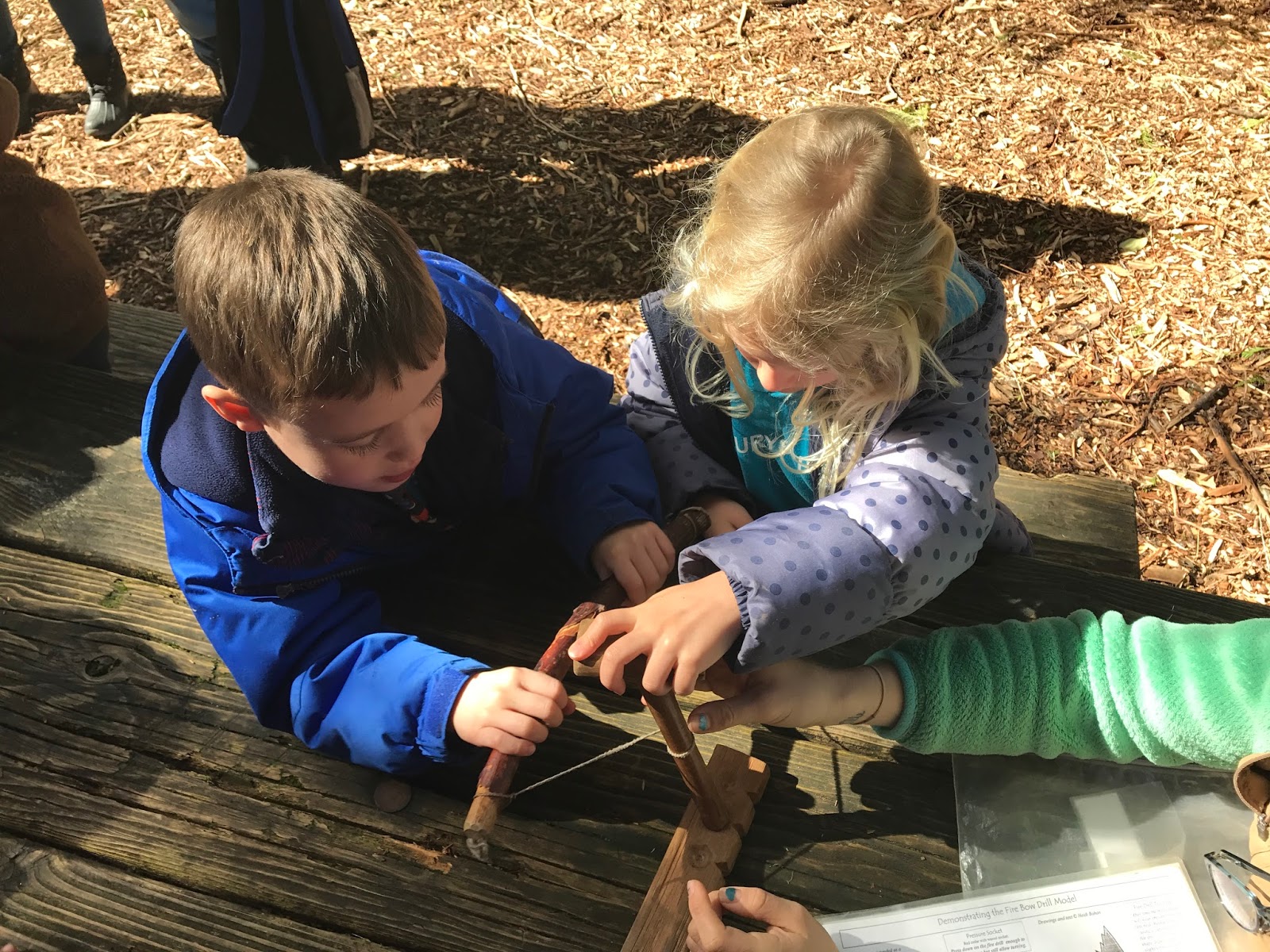
Making a fire

The sun came out for us on this first day of spring. We're all about hands-on learning and we can't wait to get into dirt up to our elbows! More to come....


Saturday, April 1, 2017

The First Annual Seabury Navigators Stop Motion Film Festival

The Seabury School First Grade Navigators made stop motion films as a culminating activity for our study of animals.

And here they are!

The Two Big Wolves (click on the title)

Featuring Sassy and Robin
Set in a forest
In this film the people are afraid of the big wolves but discover that they are not so bad after all.

The Vegetarian Anaconda and the Meat Eating Komodo Dragon (click on the title)

Featuring Sneaky the Snake and Kodo the Komodo Dragon
Set on a rain forest island
These two animals have a problem--they don't like to eat the same thing! Watch and see what happens when they come up with a solution. 

Eaglets in Danger (click on the title)

Featuring John the Eagle and Nina the Giraffe
Set in the savanna and the forest
Oh, no! The wolves come through an animal portal and take the eaglets! What are John the Eagle and Nina the Giraffe going to do!?

The Thunder Shock (click on the title)

Featuring Shell the Snail and Rainbow the Macaw
Set in the rain forest section of a zoo
What do you do when a storm comes and the habitat of the animals is destroyed? Get ready for an interesting twist in this very "sweet" story. 

Here are the steps we took:
  • We went to the Seattle Children's Film Festival and got inspired.
  • We watched several stop motion films including a Gumby and Pokey one and looked for the beginning, the middle and the end of the stories.
  • We made a film together, Help Our Planet (click on the title), to get an idea of how the "Stop Motion Studio" app worked.
  • We came up with our own characters--usually our favorite animal. 
  • We teamed up with a partner.
  • We made our characters and our scenes.

  • We came up with a story and made a storyboard that included 
    • the beginning (introduction of characters, setting, problem or situation introduction)
    • the middle (what we call the "oh, oh's"--how the problem plays out)
    • the end (the resolution of the problem and the conclusion)

  • We started filming.
  • We added sounds and music.
  • And we waited excitedly for the First Annual Seabury Navigators Stop Motion Film Festival!
  • On March 31, we invited our parents and the entire lower school to the First Annual Seabury Navigators Stop Motion Film Festival. 
  • The Festival was a hit and we received rave reviews!