Up close and personal experiences are one of the things we emphasize in our studies of ecosystems and environmentalism. And with that in mind, we visited our local zoos: Northwest Trek and the Point Defiance Zoo. Notice how we are ready to take notes with our clip boards.
Northwest Trek:
We are in the cage--the animals are free!
Close encounter with a very tiny bat
Spreading wings like a bat
Animal scat
Point Defiance Zoo:
Egg yolk jelly fish
An artist/scientist in action--drawing shapes for later drawings
Tropical fish have lots of designs to add to her collection
Study of the endangered red wolves
Comparing gray wolves, red wolves, foxes and coyotes
And then our guest speaker, Mr. Towne, came to show us his childhood toy and attached belts (rubber bands), put water in the boiler, lit the fuel, put the lit fuel in the fire box, waited for the pressure to build and voila, the piston began to go up and down, the wheel began to spin and we discovered how a steam engine works!
We then looked at a variety of steam engines including this textile mill.
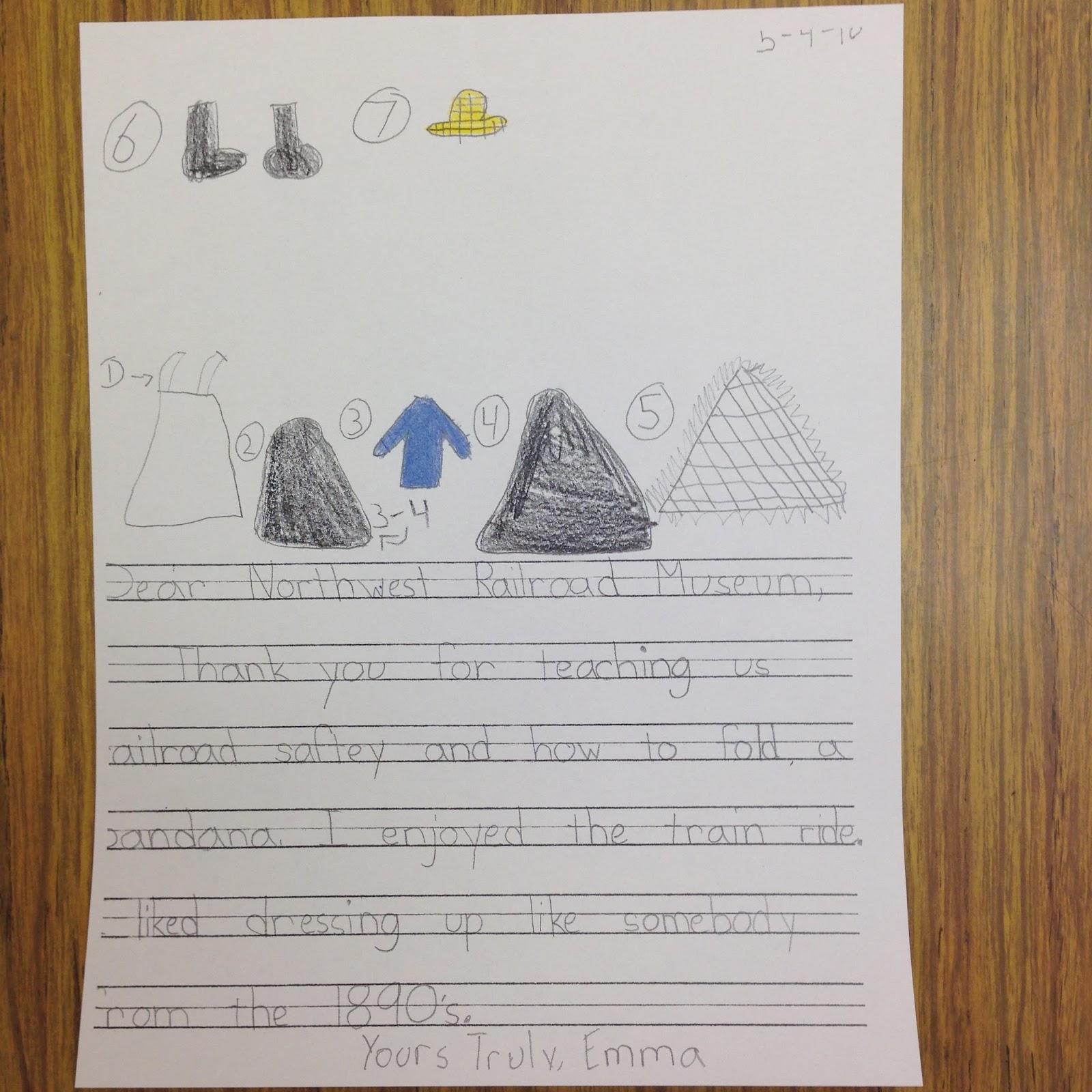
And we visited the Northwest Railway Museum in Snoqualmie, Washington.
We are learning that during the Industrial Revolution:
there were many factories
machines replaced people
people moved to cities
people could have more "things"
children worked in factories, too
and steam engine driven trains could move lots of people, cattle, cargo and big, big trees!
We dressed for the occasion, 1890's style.
We learned that railroad safety is important even today.
We made bandanas to keep our lungs safe from dust and soot.
And we road the train! All aboard!
The Snoqualmie Falls and river were beautiful, especially from this vantage point.
As part of our study of the Industrial Revolution, the Navigators and the Pioneers were challenged to undertake the Great Trans-Classroom Railroad Project. Four groups laid railroad tracks from the four corners of our room to the center of the room using popsicle sticks and straws.
Each group had to go around an obstacle and choose at least two of the following: a bridge, a tunnel, a hill and a canyon. The ties had to be two inches apart and the rails had to be three inches apart. It was quite the engineering feat!
We ended up making towns and camps and signs and even chickens and cows. We all made it just in time to Promontory Point where we held a Golden Spike Ceremony (a gold stick pin!) complete with dignitaries and the press.